When it came to choosing a figure in Greek mythology, I had a look through deities listed in the Orphic Hymns, which is how the developers came across Melinoe. I found an ode to ASKLIPIÓS, honouring him for being a healer, and a soothing figure for those suffering in pain. I found the poem to be moving, not only through the evocative, soul baring language, but as someone with a chronically ill sibling. After looking more into ASKLIPIÓS, or Asclepius, I found out that he was the inspiration behind the symbol of snakes wrapping around a staff, prominent in medicine as a symbol of healing. His symbol is often confused with the Caduceus, the staff of Hermes, symbolising commerce, an error that stems from the US Army Medical Corps in the early 20th century. This was interesting to me as the confusion between the two symbols feels reflective of how often peoples medical and physical struggles are overlooked. The irony of a symbol of healing and medicine being replaced by a symbol that encapsulates concepts of capitalism is frankly painful (no pun intended).
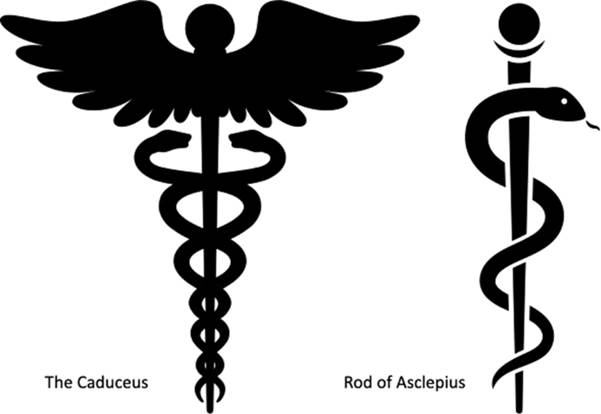
I did some more research into Asclepius, and found him to be the son of Apollo, the God of the sun, with the origin of his mother being debated. Asclepius studied under Chiron, who taught him the art of medicine. The specifics behind the snake symbolism caries, some versions stating his knowledge which lead him to be able to heal a snake, which in return whispers to him the secrets of healing. Others state he accidently struck a snake to death with a rod while imprisoned, and after witnessing another snake resurrect the first with herbs, learned the secrets of immortality.
After bringing the dead to life, Hades was said to accuse Ascelpius of stealing his subjects. Taking his complaints to Zeus, Zeus began to fear Ascelpius would teach mortals of immortality and struck him down. After Apollo pleaded for his son’s life, Asclepius was then immortalised as a constellation – Ophiuchus (serpent bearer). His constellation sits in the middle of the only split constellation, Serpens, divided into Serpens Cauda (serpents tail, and Serpens Caput (serpents head).